
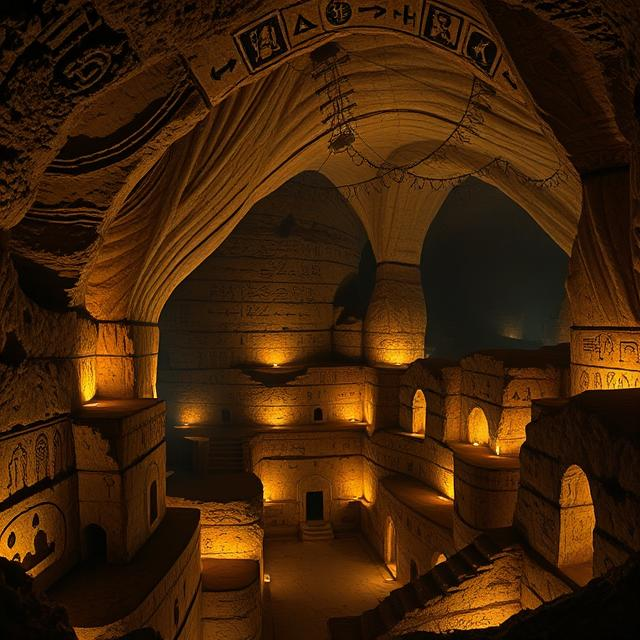
Unearthing the Hidden Depths of Matiate
In 2020, during routine renovations in Midyat, a town in Turkey’s Mardin province, workers discovered a hidden entrance leading to a vast subterranean network. This accidental find unveiled Matiate, an underground city believed to have been continuously inhabited for over 1,900 years.
The city’s intricate design includes interconnected tunnels, chambers, and communal spaces, all carved meticulously into limestone. Archaeologists have uncovered over 50 rooms connected by 120 meters of tunnels, suggesting that only a fraction of the city has been explored.
A Sanctuary Through the Ages
Matiate’s extensive underground complex served multiple purposes throughout its history. Evidence suggests it was a refuge for persecuted communities, including early Christians during the Roman era. Discoveries within the city, such as places of worship and religious symbols, indicate its use by both Christian and Jewish populations.
Beyond its role as a sanctuary, Matiate functioned as a self-sustaining habitat. The presence of water wells, storage silos, and living quarters points to a community capable of thriving underground for extended periods.
Architectural Marvels Beneath the Surface
The engineering prowess required to construct Matiate is astounding. The city’s design showcases advanced knowledge of ventilation, water management, and structural integrity. Its builders created a labyrinthine network that maintained livable conditions deep beneath the earth, a feat that continues to intrigue modern engineers and historians alike.
The discovery of such a complex structure challenges our understanding of ancient technological capabilities and suggests a level of sophistication previously unrecognized in societies of that era.
Rewriting Historical Narratives
Matiate’s unearthing compels a reevaluation of historical timelines and the development of human societies. The city’s existence indicates that ancient civilizations possessed advanced architectural and engineering skills, as well as complex social structures.
This discovery not only enriches our knowledge of human history but also invites speculation about other undiscovered civilizations and the potential for similar findings that could further alter our perception of the past.

